A converted Victorian net store on Folkestone Harbour, sea views included — rebuilt with a bold functional-fitness website, a free-intro booking flow, and a staff dashboard covering bookings, the class timetable and the blog.
The Engine Room has trained members inside a converted Victorian net store on Folkestone Harbour since 2011 — exposed brick, steel trusses, roller doors and sea views off the water from the far training window. Founder Ken W., a strongman performer with over 40 years in the fitness industry, wanted a site that matched the floor: honest coaching, sensible scaling and a community that shows up for each other as much as the whiteboard — not a generic gym template.
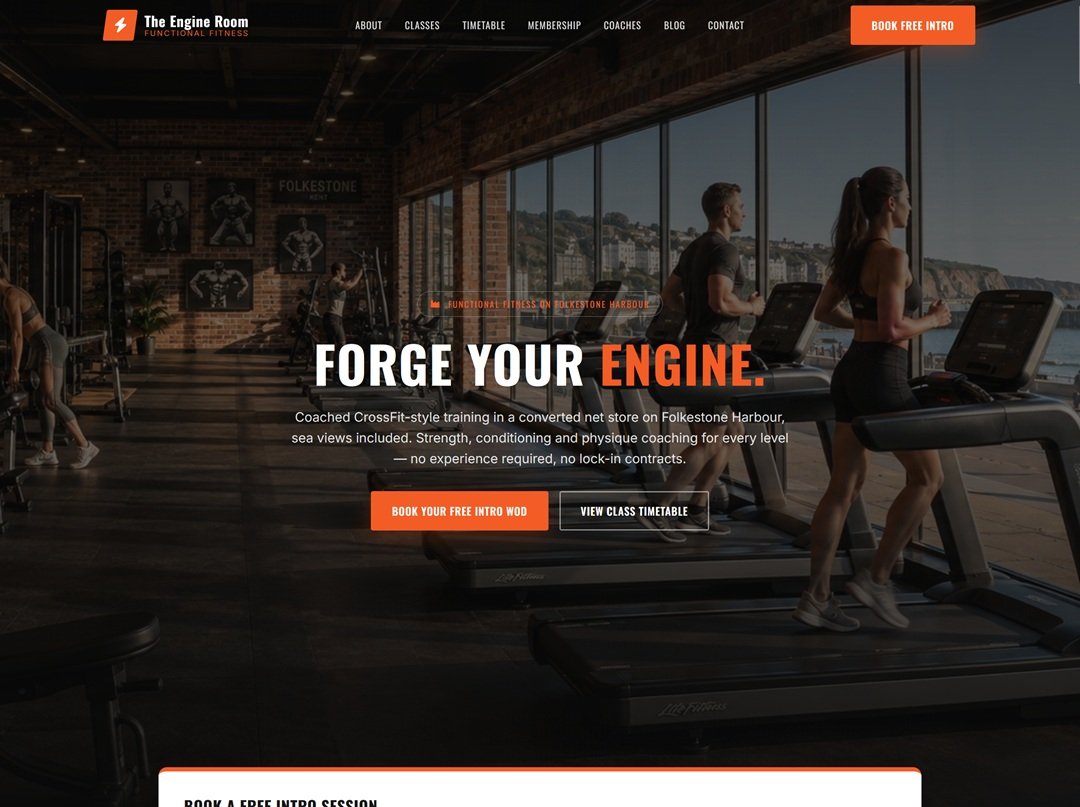
The homepage opens straight into that pitch — "Forge Your Engine" over the harbourside hero, a founding stats bar and a free-intro booking widget above the fold, so a first-time visitor can reserve a Foundations session, a Group WOD trial or a Personal Training consult before they've scrolled past the header.
Beyond the booking flow, the brief covered a real weekly class timetable with live capacity, five rolling no-lock-in membership tiers, profiles for coaches Ken, Charlotte, Tom and Emma, an EngineFit own-brand shop teaser, and a staff dashboard so the team can manage bookings, the timetable and the blog without touching code.
A visual language that carries the net store's exposed brick and steel straight onto the screen — every page built to move a visitor from browsing to booked.
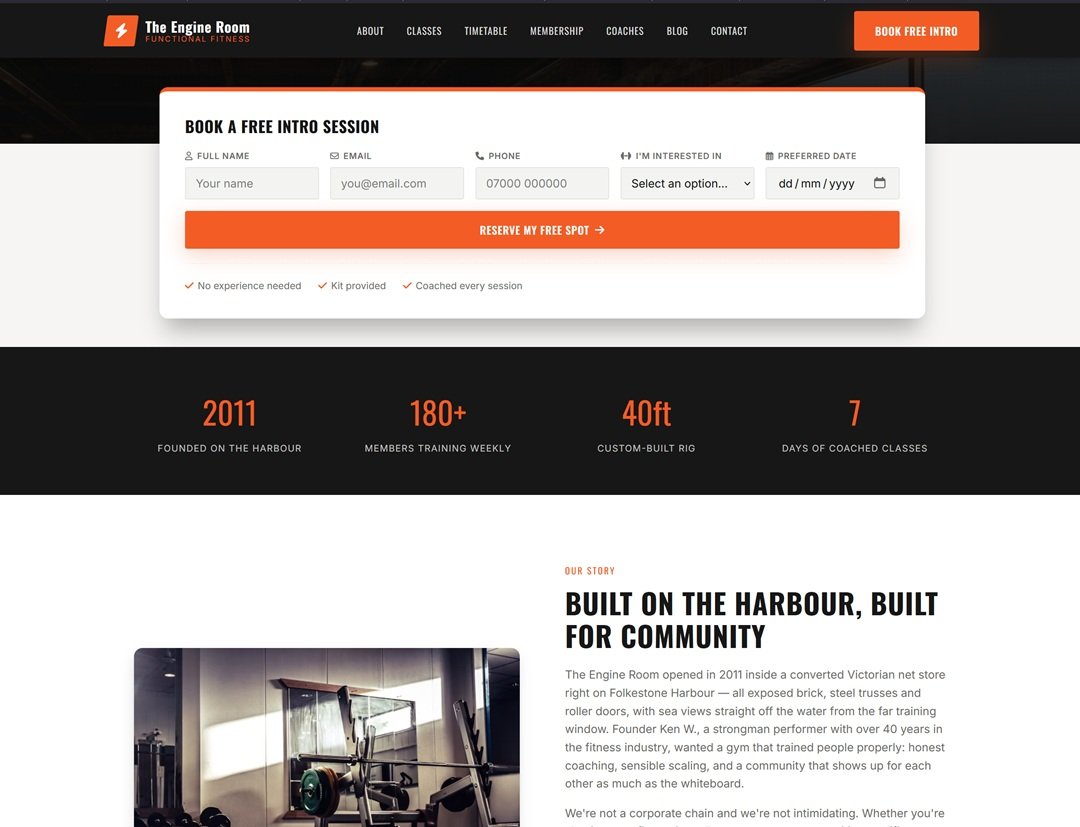
The harbourside hero, founding stats bar (2011 · 180+ members · 40ft rig · 7 days of coached classes) and the free-intro booking widget, all above the fold so first-time visitors can reserve a spot before scrolling further.
A single form capturing name, contact details, class interest — Foundations, Group WOD Trial, Strength & Physique Taster, PT Consult or Open Gym Tour — and a preferred date, ending in a branded booking-confirmation ticket instead of a plain "thank you" message.
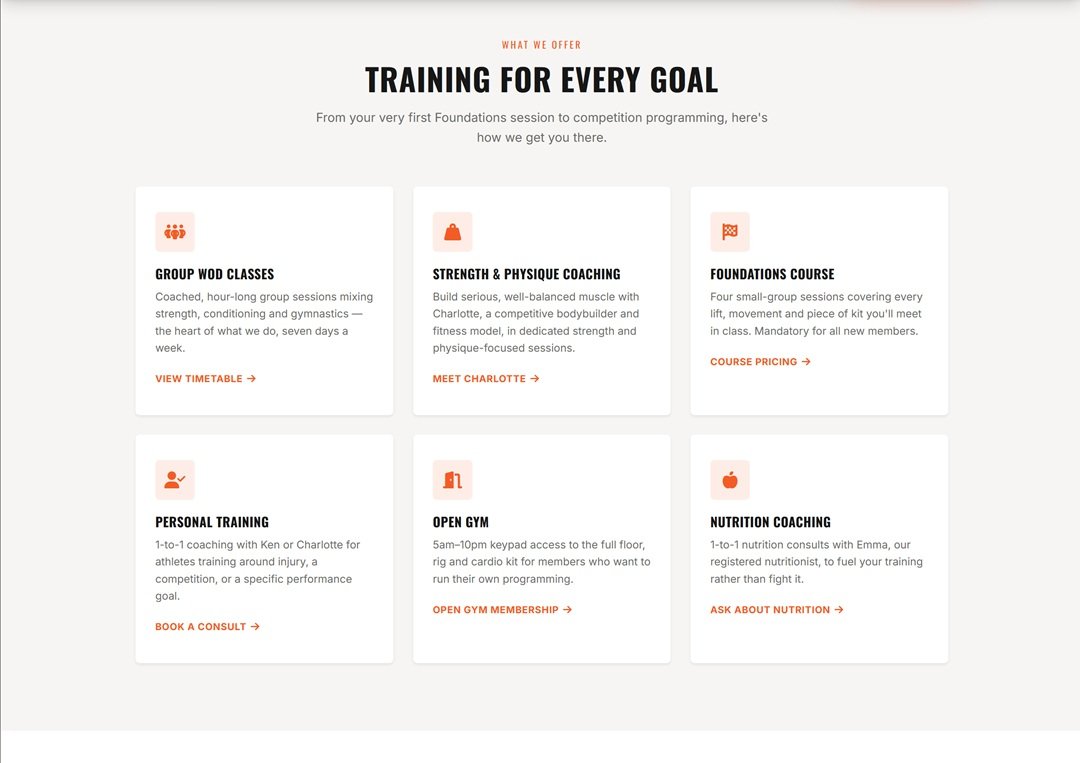
Six coached service cards — Group WOD Classes, Strength & Physique Coaching, the Foundations Course, Personal Training, Open Gym and Nutrition Coaching — each linking straight to the relevant timetable, coach or booking section.
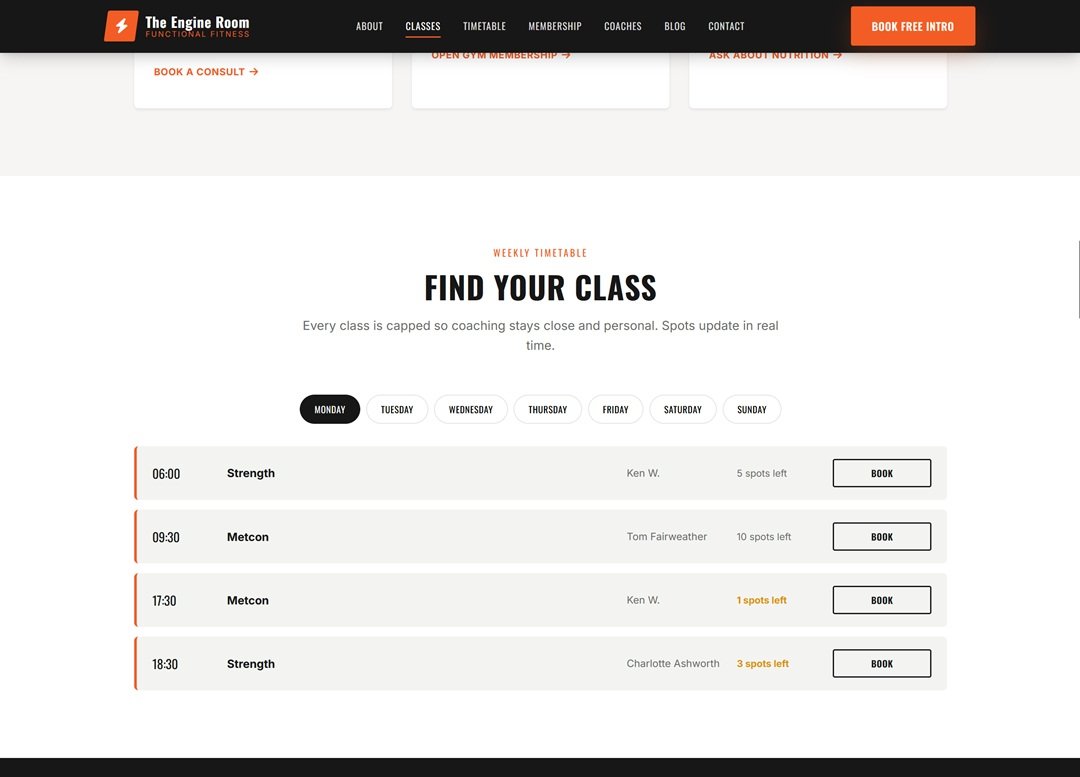
A live, day-by-day timetable pulling real booked-versus-capacity numbers per class, so a visitor can see at a glance which sessions — like Friday's Hero WOD — are close to full before they book.
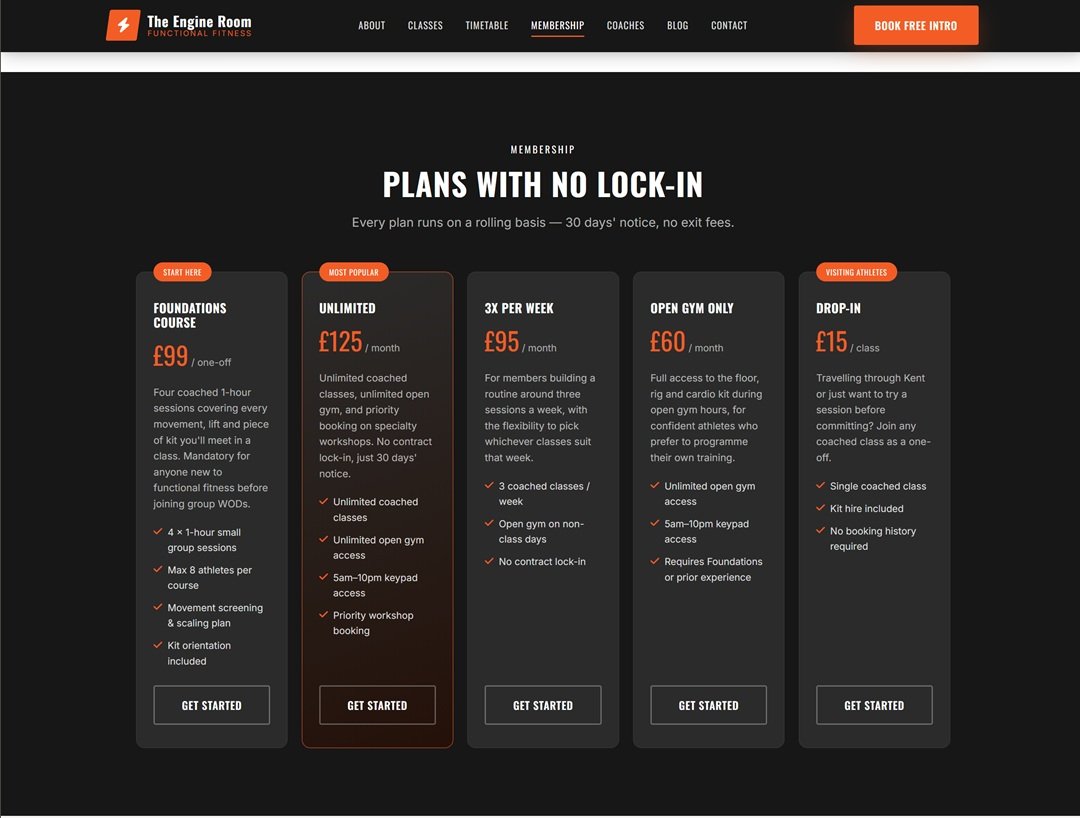
Five rolling membership tiers — Foundations, Unlimited, 3x Per Week, Open Gym Only and Drop-In — each priced and feature-listed, every one of them on 30 days' notice with no exit fees.
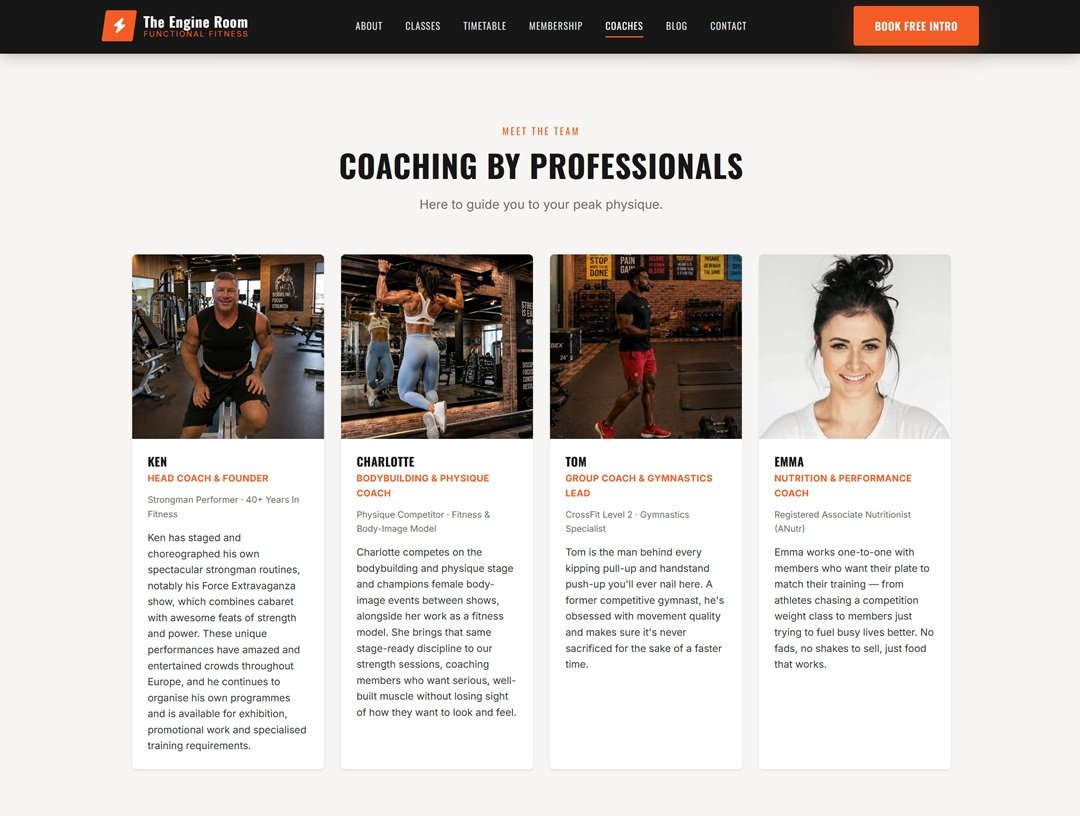
Profile cards for Ken (Head Coach & Founder), Charlotte (Strength & Physique), Tom (Group Coach & Gymnastics) and Emma (Nutrition), each with quals and a bio that reads like the coach wrote it themselves.
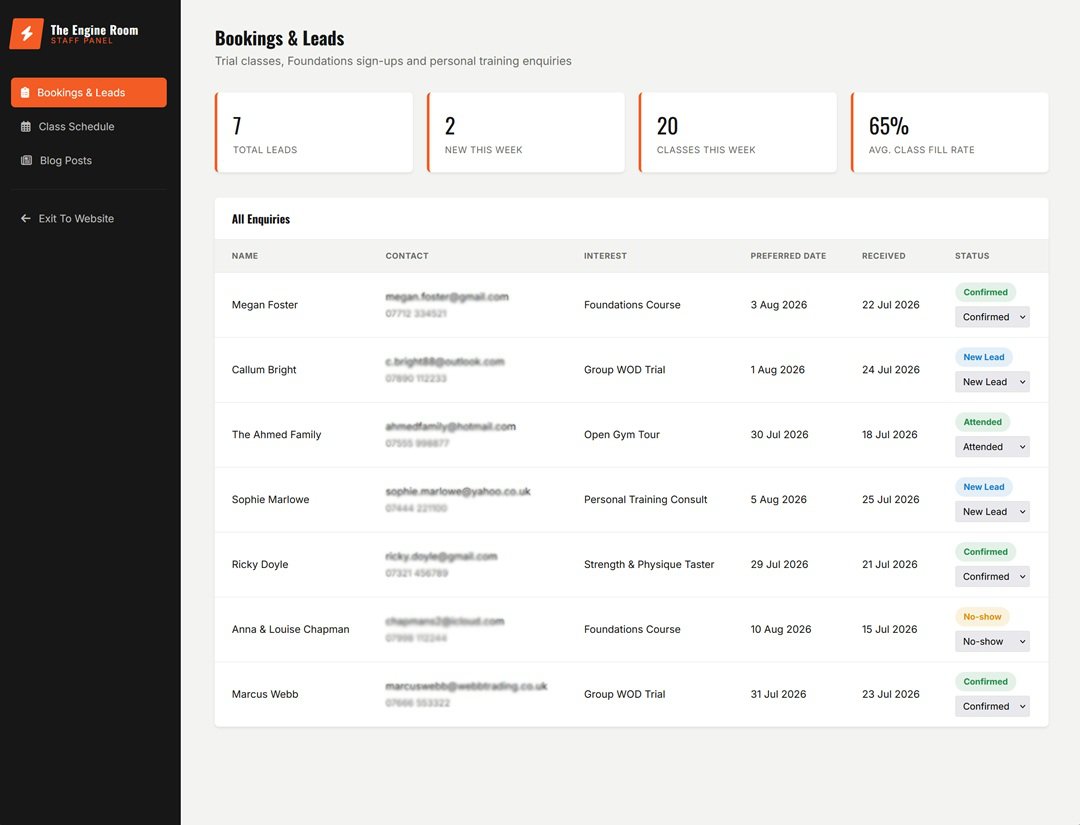
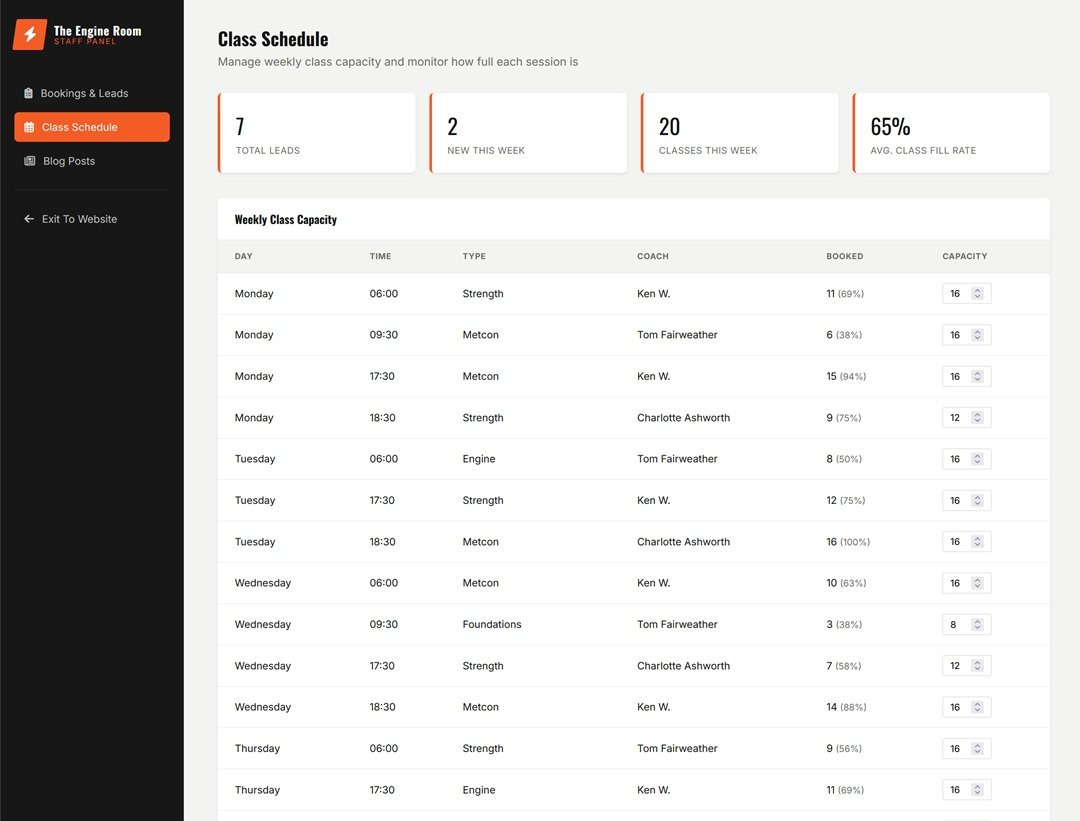
Bookings, the class timetable and the blog all run from the same staff dashboard — including a full publishing tool for posting straight to the site — no separate systems for Ken's team to juggle.
Every enquiry in one table — name, contact, interest and preferred date — with live stats for total leads, new leads this week and average class fill rate, and a status column running from New Lead through to Attended or No-show.
Weekly class capacity by day, time, type and coach, so staff can see which sessions are close to full — like Friday's Hero WOD — and open an extra slot before members start being turned away.
No campaign has run for The Engine Room yet — here's the SEO and social approach we'd apply for an independent gym competing against national chains, built on member community and named coaches.
Schema.org Gym/SportsActivityLocation markup plus per-class Event data for the weekly timetable, so "CrossFit Folkestone" and "gym near Folkestone Harbour" searches can surface real class times directly in Google.
An optimised Business Profile with a "Book Free Intro" action, member photos and a review-response cadence, targeting local-pack searches like "functional fitness gym Folkestone" and "CrossFit gym Kent".
Dedicated pages for "Foundations Course Folkestone", "personal training Folkestone Harbour" and "strength & physique coaching Kent", each pointed straight at the free-intro booking widget.
Ken's 40-year strongman career, Charlotte's competitive physique credentials and Emma's registered nutritionist status, surfaced as coach bios Google can weigh as genuine expertise signals.
Short technique-demo video embedded on the Services and Foundations pages, indexed for "how to scale a pull-up" and similar movement-specific searches that bring in beginners before they ever reach the timetable.
A genuinely live, frequently-updated class schedule — not a static PDF — gives Google a legitimate freshness signal to re-crawl, on top of being the practical reason visitors convert to a booking.
Daily short-form video of the whiteboard workout and a few members going through it — the lowest-effort, highest-frequency content a coached gym already generates every single day.
Recap reels from in-house events like the first Engine Room Throwdown, leaning on the community-over-leaderboard moments members actually talk about afterwards.
A branded hashtag for first-pull-up, first-competition and long-term member milestones, reshared alongside the professional coach content for authentic proof.
Meta retargeting toward anyone who started the free-intro form but didn't submit, recovering warm leads with a direct "Reserve Your Free Spot" nudge.
Behind-the-label content on the own-brand whey, pre-workout and training kit, building demand ahead of the promised online store launch.
Content built around members training together across generations — the kind of "phones down for an hour" community story that sets an independent gym apart from a chain.
A single-site gym doesn't need the same platform as a team running bookings, the timetable and the blog from one login — we scope the build to match. Every site launches with solid foundations for future growth.
Registered with protection
SSL, DNS, DDoS & SPAM protection
Professional email with unlimited forwarding